
How to Compare Metal Building Quotes: Look Beyond the Price

Spend a weekend on Facebook Marketplace shopping for a metal building, and you
could come away with 20 quotes.

Getting a price is easy. Deciding who to trust with your project takes more thought.
You’ll see similar buildings, familiar promises, and prices that leave you wondering what you’re missing. Sometimes there’s a meaningful difference in the specifications. Sometimes one proposal includes something another leaves out. Sometimes you’ve simply found a better price.
But even after you compare every dimension and option, there’s something a quote can’t fully show you: what it will be like to work with the people behind it.
Will they answer your questions honestly? Explain their responsibilities clearly? Follow through when they promise an update?
Those things deserve a place in your decision, too.
Start by comparing what’s actually included.
Two quotes for a “30×40 metal garage” aren’t necessarily quotes for the same building.
Before comparing totals, check the details:
Dimensions and layout: Width, length, height, and the placement and sizes of doors and windows.
Building specifications: Roof style, frame and panel gauges, framing spacing, and the design requirements reflected in each proposal.
Included services: Delivery, installation, and any stated conditions or additional charges.
Separate project expenses: Concrete, site preparation, permits, taxes, and anything else outside the quoted scope.
Warranty terms: Who provides coverage, what it covers, and how to report a concern.
You don’t have to become a metal building expert to make an informed purchase. You do need someone willing to explain the differences in language you understand.
Our Metal Building Basics guide is a useful starting point. You can also explore our Building Cost Guide for more context on pricing and options.
If your project includes a slab, ask specifically whether concrete is part of each proposal. Our guide to concrete for metal buildings can help you prepare those questions.
A lower price can change the conversation.
Before you started collecting quotes, you probably had a clear idea of what mattered: a building that meets your needs, straightforward answers, and people who follow through.
Then a lower number showed up.
It deserves consideration. But it’s worth revisiting those original priorities before making a decision. Does the lower quote meet them just as well? What have you learned about the people behind it? Have they given you confidence in how they’ll communicate and handle questions throughout the process?
A good price and good service can absolutely come together. The question is whether you have enough information to know that’s what you’re getting.
It’s easy to measure a difference of a few hundred dollars. It’s harder to put a number on having someone return your calls, explain a complication honestly, or take ownership of a mistake.
Those things still have value—even when they don’t have a line on the quote.
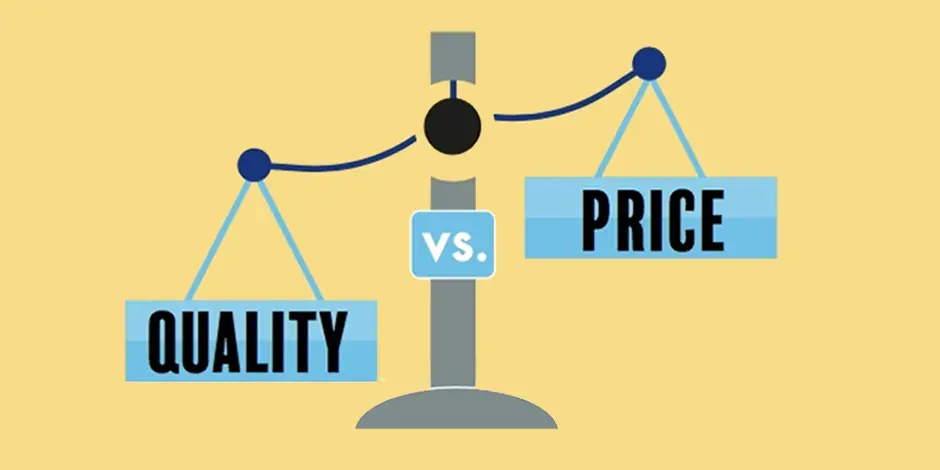
The goal of a good project manager is to help you save money and still get what mattered to you in the first place. It's to balance quality with affordability.
Consider the costs that don’t appear on the proposal.
Picture two purchases.
With one, you understand what you’ve ordered, know your next steps, and have someone keeping you informed. When a question comes up, you know who to call.
With the other, you’re repeatedly asking for clarification, rearranging plans around incomplete information, and trying to figure out who is responsible for helping you.
Even if the buildings themselves are comparable, those experiences carry different costs.
Your time has value. So does knowing what to expect. A misunderstanding that requires changes later can affect both your budget and your patience.
A higher price doesn’t guarantee a smoother project. But the lowest quote doesn’t automatically represent the lowest total cost, either.
That’s why evaluating the people matters.
Look for honesty, transparency, responsiveness, and character.
These qualities can sound like marketing language until you connect them to specific behavior.
Honesty means being willing to give an inconvenient answer.
Sometimes the answer is, “I need to check that.”
Sometimes it’s, “That option may not be worth the extra expense for how you’ll use the building.”
Sometimes it’s explaining that a requested feature won’t accomplish what you expect.
Someone who wants your business should still be willing to tell you something that might slow down the sale. Confidence is helpful; accuracy matters more.
Transparency means knowing who is responsible for what.
You should understand what you’re buying, what remains your responsibility, and which company handles each part of the project.
At Ridgeline Structures, we help with design, purchasing, customer support, and communication with the manufacturer and installers. The manufacturer handles fabrication, installation, and the applicable building warranties.
That distinction belongs in the conversation before you purchase. Our Metal Building Warranty guide explains those roles and the coverage questions to ask.
Clear responsibilities give you a better basis for comparing companies than a broad promise to “handle everything.”
Responsiveness means dependable follow-through.
An immediate reply is nice. A useful answer delivered when promised tells you more.
Does the person address your actual question? If they need more time, do they let you know? Do you have to restart the conversation every time you reach out?
You don’t need someone available every minute. You need someone whose communication you can rely on.
Character shows up when the conversation gets difficult.
Pay attention when you question a recommendation, catch an error, or ask for time to decide.
Does the person listen? Correct the mistake? Respect your decision?
It’s easy to be agreeable when everything is moving toward a sale. How someone handles a little friction can tell you more about how they’ll approach a larger concern.
A race to the lowest price can lose sight of the project.
There’s nothing wrong with asking for a competitive price. We expect customers to compare their options.
But when the entire conversation becomes “Who will go lower?” it’s easy for the building’s purpose, the scope of work, and the service expectations to receive less attention.
If the price keeps shrinking while the promises stay the same, it’s reasonable to ask how those promises will be fulfilled.
A purchase works best when the customer understands the value and the company can support the commitments it makes. A number that wins the sale but leaves everyone frustrated afterward isn’t much of a victory.
Choose a building—and people—you feel confident about.
Before accepting a quote, ask yourself three questions:
Do I understand exactly what I’m buying and what isn’t included?
Does this proposal meet the priorities I started with?
Have these people given me reasons to trust their word?
You should feel comfortable with all three answers.
At Ridgeline Structures, we want to earn that confidence through clear explanations, honest conversations, and follow-through. Ask us about the specifications. Ask us about responsibilities. Take the time you need to understand our proposal.
Ready to talk through your project? Request a metal building quote. Tell us what you want to build, where it will go, and what matters most to you.
Prefer to explore your ideas first? Open our 3D building designer. Customize your building, then save your design to get a quote.
A good place to start is a conversation with someone who listens.


Comments